
Vrané nad Vltavou Waterworks: The Oldest Component of the Vltava Cascade Is More Than 90 Years Old
September 8, 2026 / 9:33 AM
The Vrané nad Vltavou Waterworks is one of the most significant structures in Czech water management. Built between 1930 and 1935, it was the first facility constructed as part of the Vltava Cascade and is therefore its oldest component. At the same time, it forms the cascade’s final downstream stage before the Vltava River enters Prague.
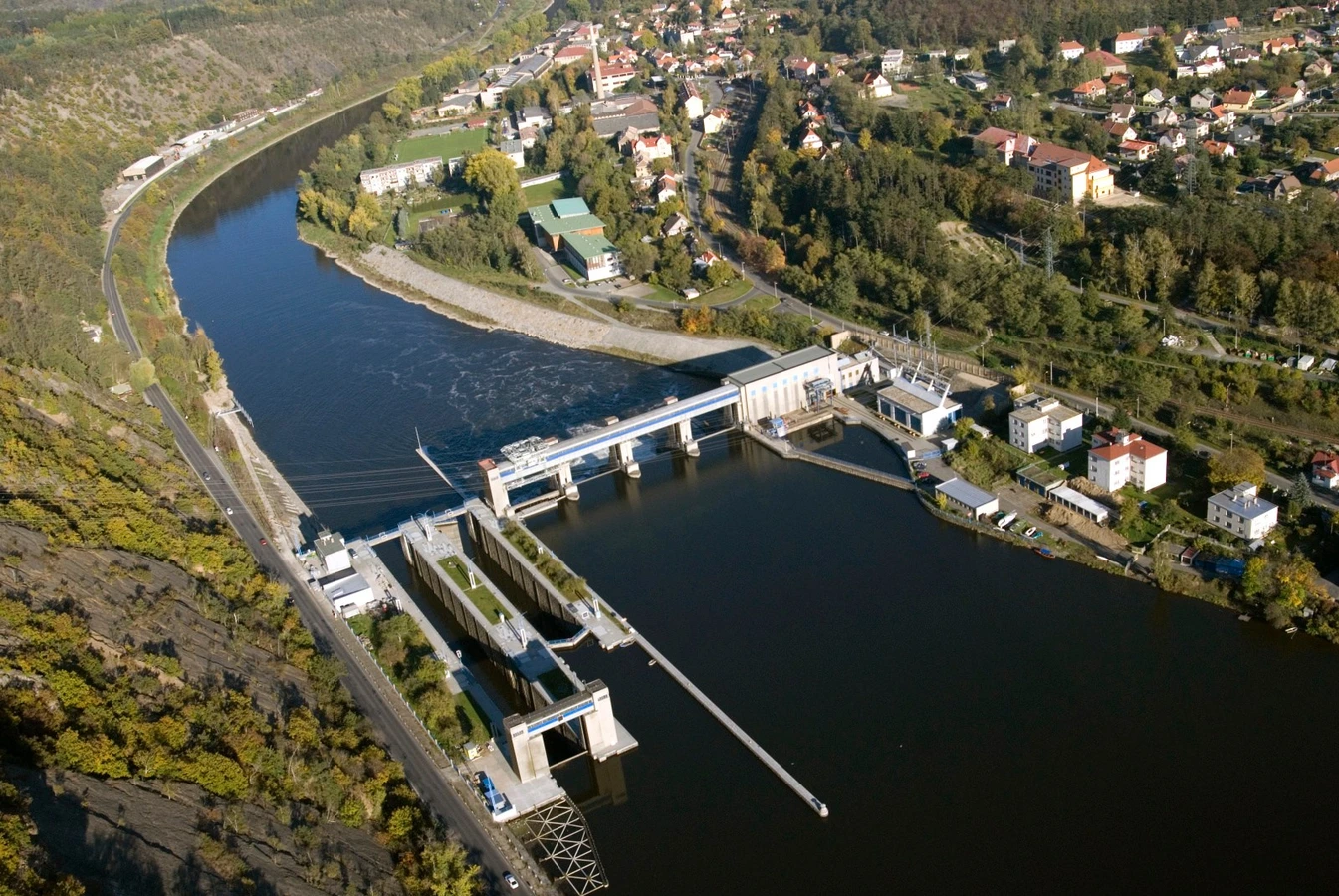
The original primary purpose of the project was to improve navigation conditions on the Vltava River. Over time, however, the waterworks acquired several additional important functions. It helps regulate water outflows from the upstream hydropower plants of the Vltava Cascade, ensures the minimum flow rate in the lower section of the Vltava, and generates carbon-free electricity through its hydropower plant.
The waterworks consists of a movable weir with four spillway bays, a pair of navigation locks, and a run-of-river hydropower plant. Commissioned in 1936, the plant was the first large-scale hydropower station on the Vltava River. It is equipped with two Kaplan turbines with a combined installed capacity of 16 MW and generates approximately 60 million kWh of electricity annually, enough to supply around 20,000 households.
The importance of the structure is also reflected in its technical parameters. The reservoir created by the dam forms a backwater stretch nearly 13 kilometers long, has a storage capacity of more than 11 million cubic meters of water, and plays a crucial role within the overall system of Vltava waterworks. In addition, the facility is a valuable example of interwar Czech technical architecture and engineering excellence.
To mark the 90th anniversary of the hydropower plant’s commissioning, the Vrané nad Vltavou power station will be exceptionally opened to the public. Visitors will have a unique opportunity to gain insight into the operation of one of the most important and historically valuable waterworks on the Vltava River.
